The energy of sport and betting is transforming iGaming, particularly through instant, crash, and skill-based mechanics that turn traditionally passive gameplay into fast-paced, interactive, and competitive experiences.
To explore how the infusion of sport and betting energy into iGaming is transforming casino experiences and the wider entertainment industry, Evoplay spoke with Thomas Donson, Head of Trading at DATA.BET, a trusted sportsbook solution supplier; Tatiana García Barrenechea, Commercial Director LATAM at Light & Wonder, a global supplier of gaming content and technology for casino operators; and Ivan Kravchuk, CEO at Evoplay, an industry-leading iGaming provider.
Drivers of modern casino thrills
The entertainment industry is in constant motion, shaping and responding to changing player tastes. iGaming reflects this dynamic, drawing inspiration from the energy of sports, betting, esports, and skill-based gameplay to create fresh, engaging experiences. Why draw on these sources of inspiration? They reflect the increasingly active and engaged mindset of today’s players.
This ongoing cycle of shifting player expectations defines modern game design. Ivan Kravchuk, CEO of iGaming provider Evoplay, notes that the company recognised this trend early and began developing skill-based games as well as reimagining instant and crash mechanics to create more interactive, player-driven experiences, often complemented by sports themes. He adds that this shift in expectations has been driven primarily by the internet, social media, streaming platforms, and a growing digitally native player audience.
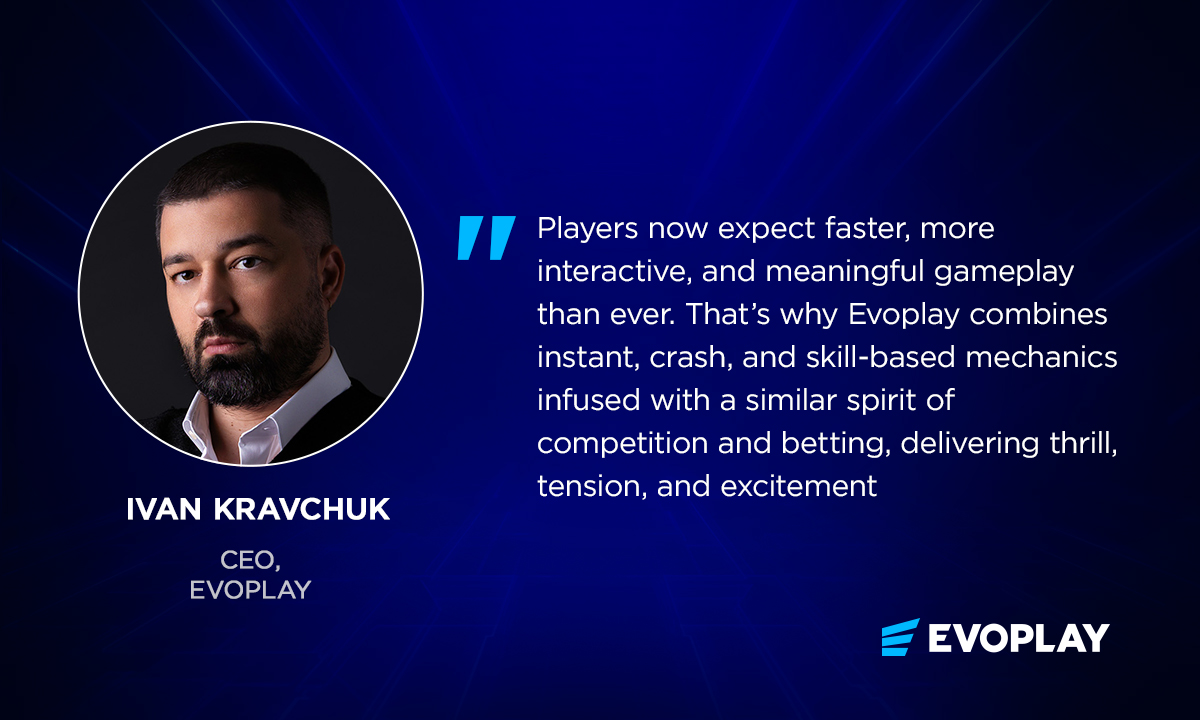
Ivan explains that this influence runs both ways: iGaming increasingly borrows from sports-style competition and betting logic. Meanwhile mainstream digital entertainment, particularly video gaming, has also adopted gambling-like mechanics, from loot boxes to randomised rewards. As a result, the boundaries between casino and non-casino play are becoming increasingly blurred.
That’s why Evoplay’s approach reflects a wider shift: the shared energy of pace, excitement, and competition is blurring the lines between online casino, betting, and esports.
Tatiana G. Barrenechea from Light & Wonder points out that players are increasingly looking beyond traditional verticals:
Players are less concerned with vertical distinctions and more focused on engaging, familiar experiences. Sport-themed instant games naturally sit at this intersection by combining betting-style logic with casino gameplay.
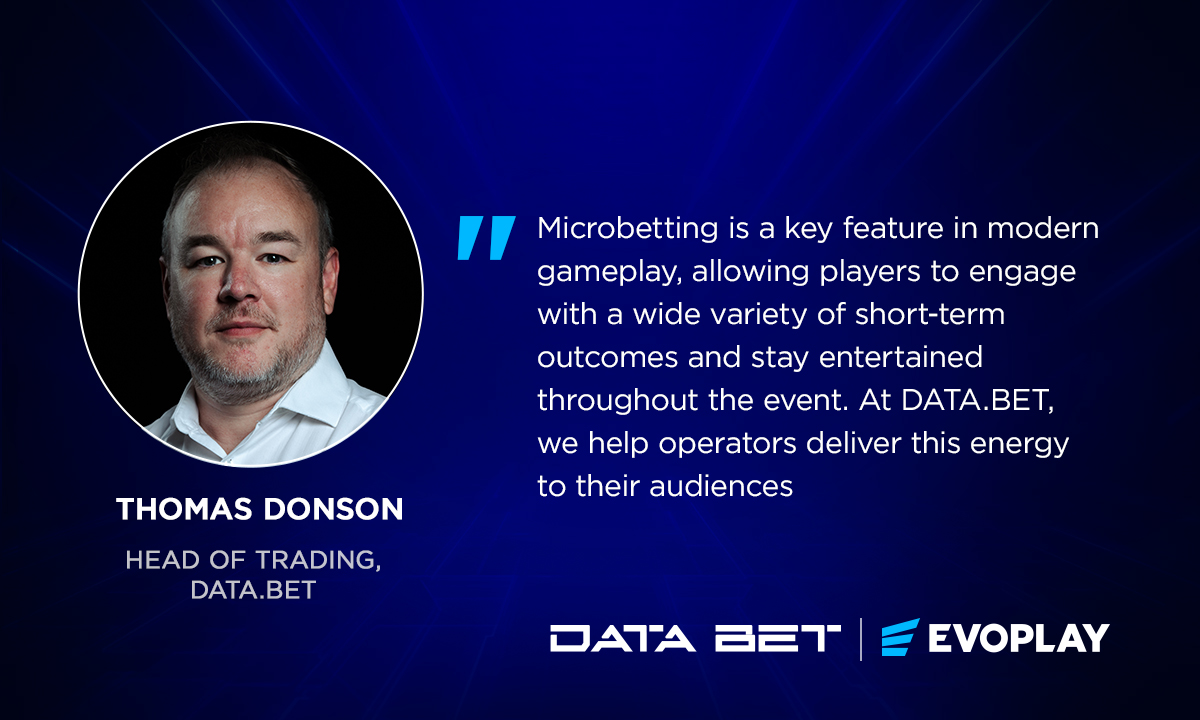
Thomas Donson, Head of Trading at DATA.BET, expands on this trend from a sports betting perspective, noting that these entertainment industries are already in an active phase of convergence:
Data-driven statistics, social media engagement, and, in some cases, live interactive betting experiences are increasingly being built into entertainment formats, introducing new audiences to betting products.
The expert highlights that convergence is what boosts player engagement across all channels – a long-standing goal for bookmakers. Traditionally, linking casino and sportsbook players was hard, but esports is helping bridge that gap.
This became possible due to a newer generation of players who often enjoy both skill-based and betting-style games, looking to replicate the pace and excitement of casino gameplay within sports and esports. They also expect strong gamification within the core product, fast markets, and easily discoverable betting options. To meet these expectations in practice, Thomas highlights microbetting as a key enabler.
Together, these perspectives highlight a clear trend. Across the iGaming ecosystem, online casino and betting verticals, alongside esports entertainment, are increasingly sharing ideas in product development, engagement, media, and monetisation, creating a diverse yet unified entertainment landscape.
Global reach, local touch: analytics-led approach
Globally, sport remains the strongest unifying force across entertainment. Football alone engages up to 4 billion fans worldwide, while gambling involves around 2 billion adults across casinos, sports betting, lotteries, and other related formats.
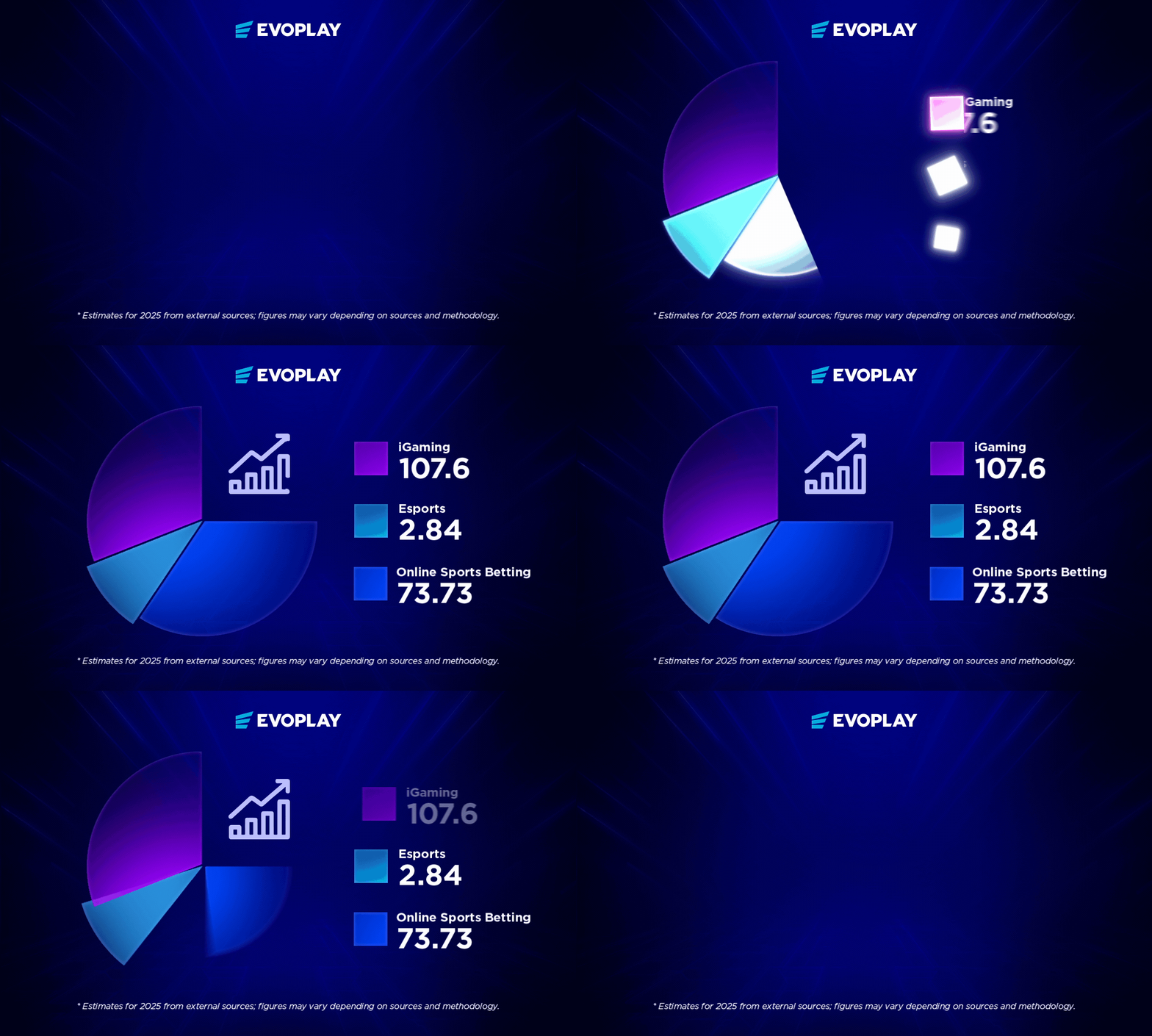
These audiences are not isolated. Players move freely between sport, betting, and casino products, driven by the same core motivation – excitement and emotional involvement. As Ivan Kravchuk notes, fans place bets when their teams are playing, directly connecting passion to action. Outside match time, that same audience remains active and increasingly turns to online casinos in search of comparable thrills.
This crossover shows why sports-inspired and betting-style mechanics feel intuitive to modern players, creating a strong foundation for their adoption across different products and regions. Fast formats and instant decisions mirror the pace and tension of live sports and microbetting, making these experiences naturally engaging across verticals.
Building on this alignment of interests, DATA.BET develops specialised products and features to support cross-channel engagement, keeping players active across sportsbook and online casino environments within a single ecosystem. Thomas Donson says:
Our aim is to give clients products that appeal across all disciplines, from UX/UI elements with skill-based mechanics to interactive features within sports events and a more personalised customer experience. Through them, DATA.BET helps operators drive interplay between betting verticals while keeping users within a single ecosystem.
Yet shared mechanics do not eliminate local differences. While betting-driven formats resonate globally, success depends on how well they reflect local habits, terminology, and expectations. In this context, DATA.BET sees the solution in delivering exclusive, locally tailored content. Drawing on LatAm experience, Thomas Donson notes:
Products tailored to local markets are increasingly popular. Customers are no longer willing to compromise: local betting terminology, familiar branding, and a solution that reflects their level of knowledge all matter.
He adds that as gaming and betting become more integrated into mainstream entertainment and mass media, operators will increasingly rely on high-quality data and AI-driven analytics to deliver fast, dynamic, and personalised player journeys.
From the provider perspective, localisation and personalisation shape game design, with sports-inspired mechanics working best when adapted to regional preferences. As Ivan Kravchuk highlights, Evoplay’s sports-themed lineup reflects this approach, offering football titles like Penalty Shoot Out: Cup Mania, as well as cricket and basketball games such as Cricket Duel or B-Ball Blitz, which resonate across markets, with football-themed games performing particularly well in LatAm.
Tatiana G. Barrenechea, based on her extensive LatAm experience, notes that in the region – especially Brazil – crash and instant formats are proving highly effective in connecting sportsbook and casino audiences through familiar betting-style dynamics. These games drive high session frequency through familiar multipliers, fast-paced play, and a perceived sense of player control.
She adds that for operators, this translates into stronger acquisition and cross-selling; for providers, greater differentiation; and for players, faster and more interactive gameplay.
However, the expert stresses that long-term success depends on clear compliance alignment, robust design, and genuine product innovation – not simply launching “another crash game” with a superficial sports theme.
Drawing on this perspective, Tatiana notes that partnerships with progressive studios, including Evoplay, allow Light & Wonder to expand their aggregation portfolio with innovative, sports-driven instant content, supporting cross-selling in football-centric regions such as Latin America.
Taken together, this shift places the player at the centre – with behaviour and expectations guiding content, localisation, and engagement.
What’s next play?
As iGaming, betting, and sport-inspired entertainment converge, the future will depend on how content across verticals can merge seamlessly, offering players interactive, emotionally engaging, and competitive experiences.
From a provider perspective, Ivan Kravchuk believes that the future of the casino industry will see casinos evolve into multi-layered entertainment “supermarkets” – spaces where games, betting, and complementary content coexist, allowing players to move seamlessly between experiences.
In terms of game design and production, he notes that mechanics themselves will continue to evolve. This is already evident in how crash and instant formats – originally niche, betting-inspired concepts – have moved into mainstream gameplay. Yet the core challenge remains unchanged: delivering anticipation, adrenaline, and the thrill of winning as distinct experiences in a digital-first environment. Ivan notes that how these experiences are shaped will largely depend on the devices and technologies players use, whether current platforms like smartphones and desktops or future solutions that are yet to emerge, influencing both game design and the way players interact with content.
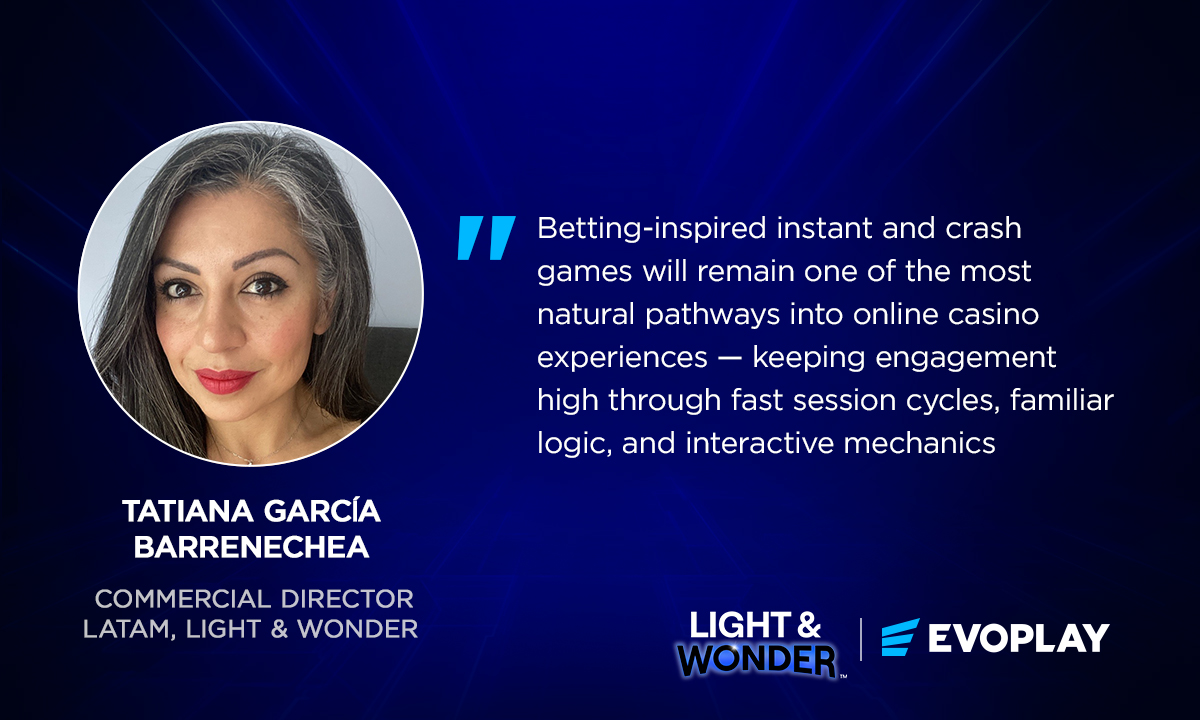
Looking ahead, Tatiana G. Barrenechea returns focus to a key long-term challenge: retaining sports bettors beyond live events. In her view:
About the future of sports betting, Thomas Donson points out that it will be shaped by deeper convergence across live, virtual, and hybrid formats, driven by the ability to combine content, real-time insight, and intuitive interaction. He also highlights a clear behavioural shift under the influence of social media: esports bettors are already highly community-driven, and as social platforms continue to permeate everyday life, this dynamic is only set to intensify – further reshaping how betting and gaming experiences are discovered, shared, and consumed.
As sport, betting, and interactive gaming continue to converge, iGaming is becoming less about strict verticals and more about how naturally it delivers excitement, tension, and connection in real time.
Success will increasingly depend on how seamlessly operators can meet the speed, interactivity, and sense of agency that modern players already expect across formats, platforms, and moments of play.