A good bonus can bring a player back for one more session. But what happens when players have a reason to return beyond the next reward – because they’re invested in their progress?
The iGaming industry has mastered different engagement mechanics: bonuses, tournaments, missions, and various promotional campaigns. They create goals and keep players interested in specific activities. However, even the most effective mechanics are often tied to a single event, stage, or reward. For long-term retention, the industry needs to answer a different question: “What makes players want to continue this journey?”
Evoplay’s new product – Player Space – is the answer. It shifts the focus from one-off promotions to ongoing progression, giving players new milestones and goals to work towards over time.
To see how this approach works in practice, Evoplay analysed Player Space across three areas: player retention from one season to the next, the value of engagement and value generated by returning players, and the impact on operator performance in terms of Bet Sum and GGR per user.
In partnership with Kanggiten, one of the select partners given early access to the product, this case study looks at early results – exploring how it influences player behaviour and contributes to long-term value (LTV).
Player Space: How it works and why it matters
Player Space is Evoplay’s loyalty and retention solution built around a long-term player journey. It adds a progression layer to the existing gaming experience, allowing players to track their progress, move through levels, and unlock rewards as they play.
Unlike traditional promotions, which give players a reason to return for a specific event or reward, Player Space creates a dedicated space where their progress continues over time. Players can see where they are, what comes next, and what they can unlock as they move forward.
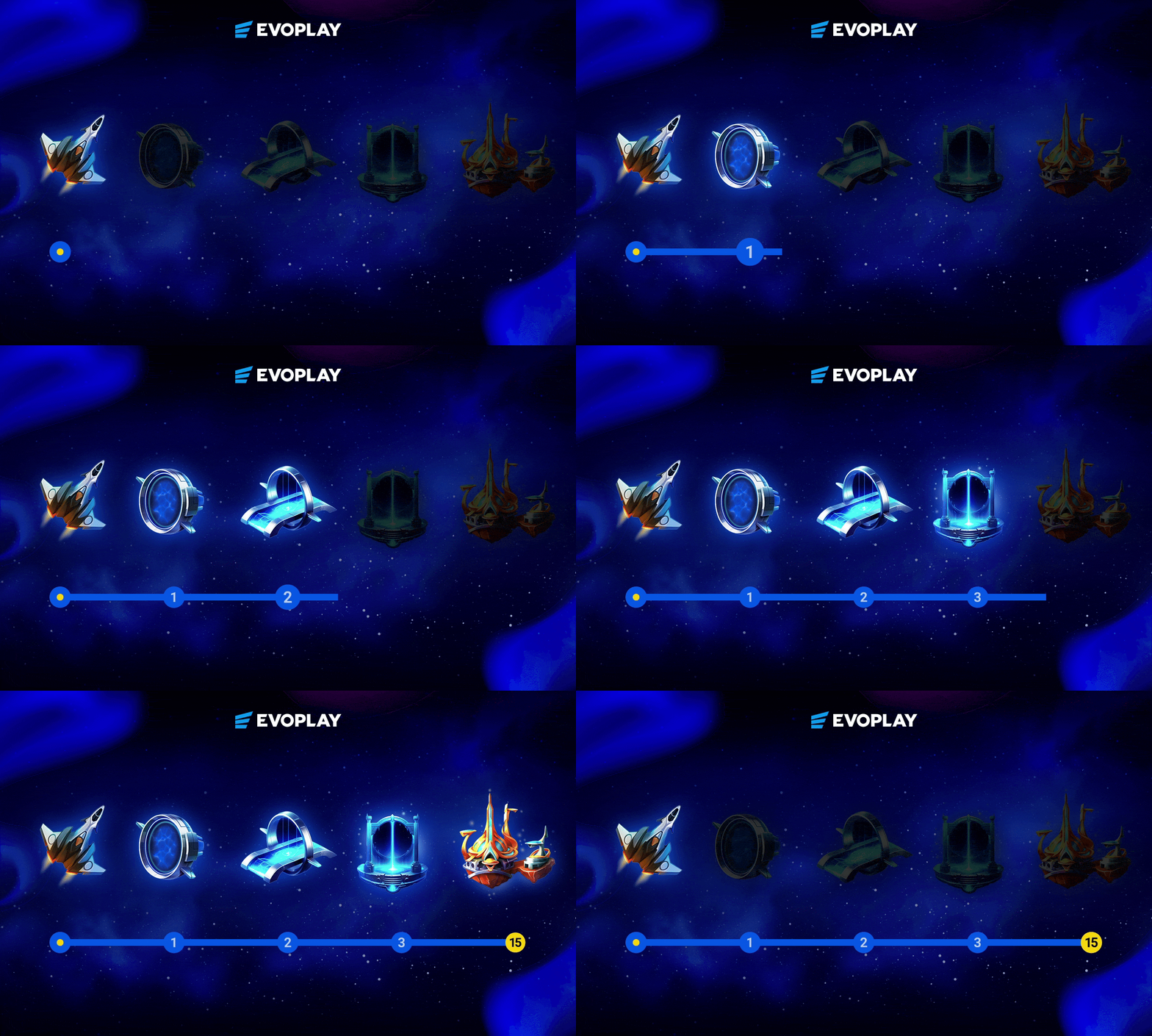
At the centre of the experience is a structured, level-based progression system. Progress earned through gameplay moves players through levels and towards new rewards, while a distinctive visual universe gives the experience its own identity and makes progression more engaging.
The value works both ways: players receive a richer entertainment experience, while operators gain new opportunities to build longer-lasting engagement with their audiences.
How Player Space supports partner goals
| Multi-layered engagement.
Combines the thrill of gameplay with a structured progression system to keep players engaged on multiple levels. |
Long-term player retention.
Creates continuous reasons to stay engaged through progression, rewards and a richer player experience, supporting long-term retention. |
| Player loyalty.
Builds a stronger connection between players and the brand by turning individual interactions into a continuous journey. |
Competitive differentiation.
Gives operators a distinctive gamification experience with cross-game engagement that helps their offering stand out from competitors and creates additional value for players. |
 Player Space is not built around a one-size-fits-all approach. It can be adapted to the needs of each partner – from season structure and duration to progression and reward mechanics – allowing operators to create a relevant experience for different player segments.
To evaluate the long-term impact of Player Space, Evoplay looked beyond individual season results and analysed how player behaviour changes over time: whether users continue interacting with the product, whether audience value remains consistent, and what contribution returning users make to partner results. The data from multiple seasons revealed the bigger picture.
How Player Space performs over time
In the following three cases, Evoplay shows how Player Space works in practice: from continued player engagement across seasons to the value of returning audiences and measurable changes in partner performance.
CASE 01: Around 30% of players show long-term retention
To understand how Player Space performs over the long term, Evoplay started with a simple question: do players continue engaging with Player Space across seasons?
To answer this, we analysed three partner systems on the Kanggiten platform that were given early access to Player Space during its pilot phase. We compared players who interacted with Player Space during one season with those who continued using the product in subsequent seasons.
The results showed a consistent pattern. Around 30% of players in the analysed period were long-term returning users – players who had already interacted with Player Space in the previous year and continued returning across multiple seasons.
Almost 30% of analysed Player Space users continued returning across multiple seasons.
For a product built around individual seasons, this result is particularly meaningful. One season ends, but some players continue into the next one. Each new season can attract new users while also bringing back those who already have experience with Player Space.
This creates a returning audience that carries the experience from one season into the next. In other words, players do not restart their journey every time a new season begins – they continue building on their previous progress.
Retention is not only about bringing players back. It is about giving them something to come back to. When players have already invested time and built progress within a system, the next season starts with an existing layer of engagement – not from zero.
– Anastasiia Yakovykh, Head of Growth at Evoplay.
CASE 02: Returning players deliver up to 3.2x higher GGR
Player return is the first indicator of a longer-term journey. The next step was to understand what value this audience creates for partners – users who have already interacted with Player Space and continue their journey across seasons.
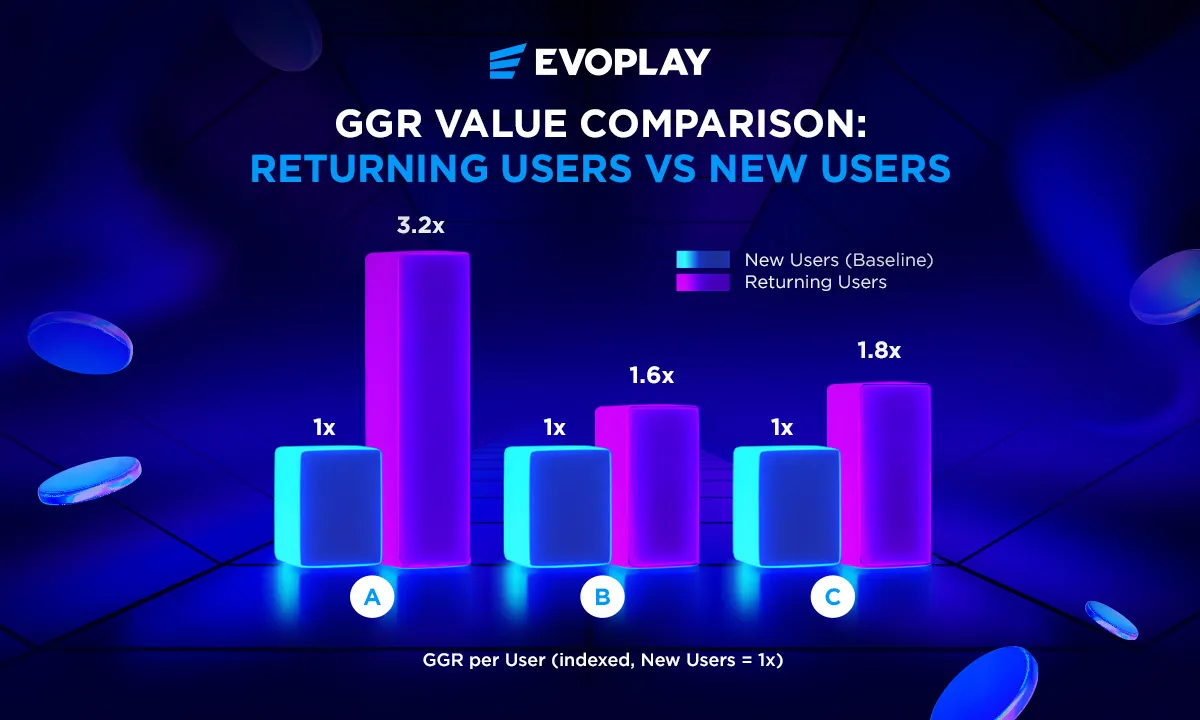
Evoplay compared two groups within a new season across several Kanggiten partner systems: users interacting with Player Space for the first time and users who entered the season with previous experience.
The results showed a consistent trend.
Returning users generated higher GGR per player than New Users across all analysed systems.
A similar pattern was also observed in DAU (Daily Active Users): across several systems, returning audiences demonstrated higher gaming activity per user.
Players who continue interacting with Player Space after their previous experience represent a more valuable audience for partners. Familiarity with the progression system drives stronger engagement and long-term loyalty.
– Anastasiia Yakovykh, Head of Growth at Evoplay.
This creates a longer value journey:
engagement → continued participation → higher player value
This is where gamification reveals its broader potential: it does not simply extend gameplay, but creates a more structured player progression through achievements, personalised rewards, and clear goals.
In the analysed systems, returning Player Space users generated up to 3.2x higher GGR per player than new users.
Operators have responded very positively to Player Space and the value it brings to the player offering. By bringing progression into the gaming experience, it gives them another powerful tool to strengthen player loyalty and long-term retention.
– Viktor Cherkas, CEO at Kanggiten.
CASE 03: +54% Daily Rounds, 48% Daily Bet Sum, +56% Daily GGR
The first two cases show why returning audiences become an important part of Player Space’s long-term value. The third case shows how this logic works through the performance of one partner system and its key business indicators after implementing the product.
We analysed two seasons of interaction to understand how key metrics changed when player progression became part of a longer-term journey.
In the first season following the launch of Player Space, the partner system demonstrated growth across key activity indicators:
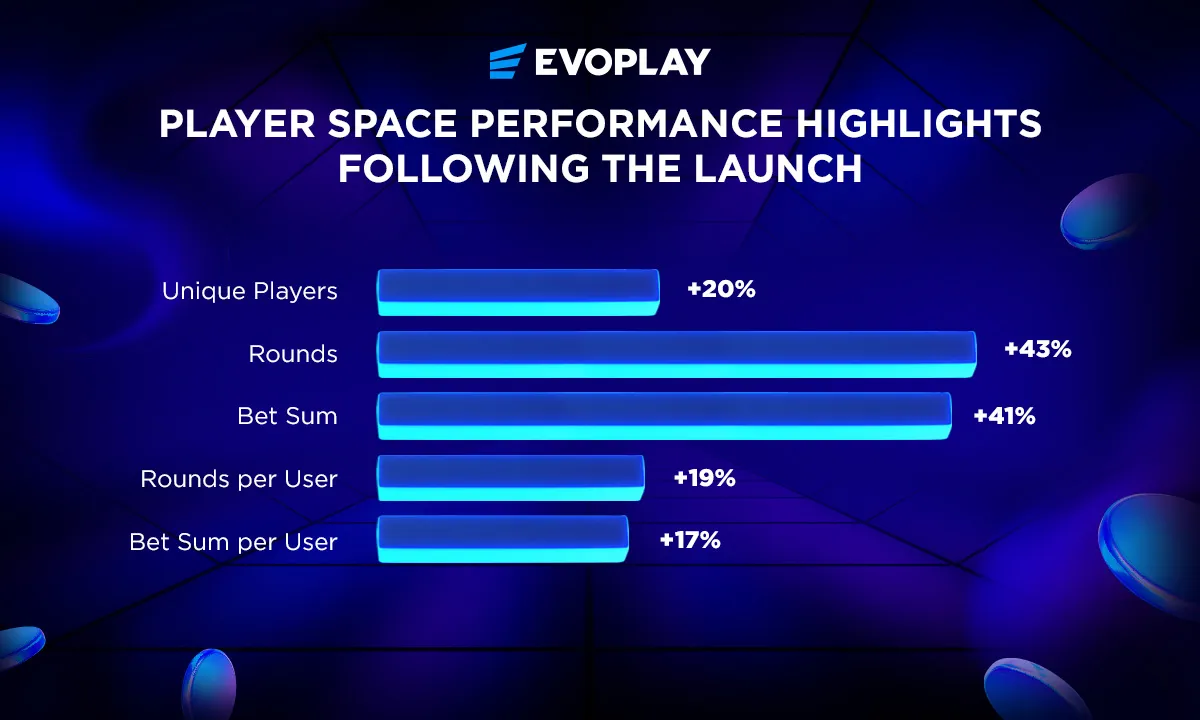
But the most interesting results came later.
In the next season, compared with the period before Player Space was connected:
- Daily Rounds: +54%
- Daily Bet Sum: +48%
- Daily GGR: +56%
The value of the audience that continued interacting with Player Space was particularly notable.
Returning users represented around 23% of the next season’s audience, but generated:
- 48% of Bet Sum
- 54% of GGR
The difference becomes even more visible on a per-user level:
- GGR per User among returning users was 3.9x higher;
- Bet Sum per User was 3.1x higher compared with new users.
This creates an interesting picture: a relatively small part of the audience generated more than half of the GGR in that season.
Returning Player Space users, representing 23% of the following season’s audience, generated 48% of Bet Sum and 54% of its GGR.
The long-term value of Player Space
The joint Evoplay and Kanggiten case study reveals a consistent picture: players continue returning to Player Space across multiple seasons, and returning users demonstrate higher value for partners than new users across the analysed systems.
These findings highlight the potential of a more comprehensive, long-term approach to retention: rather than creating isolated reasons for another session, brands can build systems where players already have a goal, progress, and a next step.
A bonus can open the door to the game. But progress gives players a reason to keep the journey going.
Player Space turns every gaming session into part of a longer journey: the next level becomes a new goal, a new season becomes a continuation of the mission, and accumulated progress becomes a reason to return.
Because in a long-term game, success does not come from simply offering the next reward. It comes from creating a path players want to continue following.
Looking for powerful retention tools? Get in touch at [email protected] or reach out to your KAM, and let’s discuss how we can drive mutual growth.