The best games create a feeling before players even think about why they enjoy them.
That usually happens when game mechanics, visuals, rhythm, and ideas move in the same direction instead of competing with each other. A recognisable concept helps. So does the right format.
But what really matters is whether the experience feels close to the audience it speaks to.
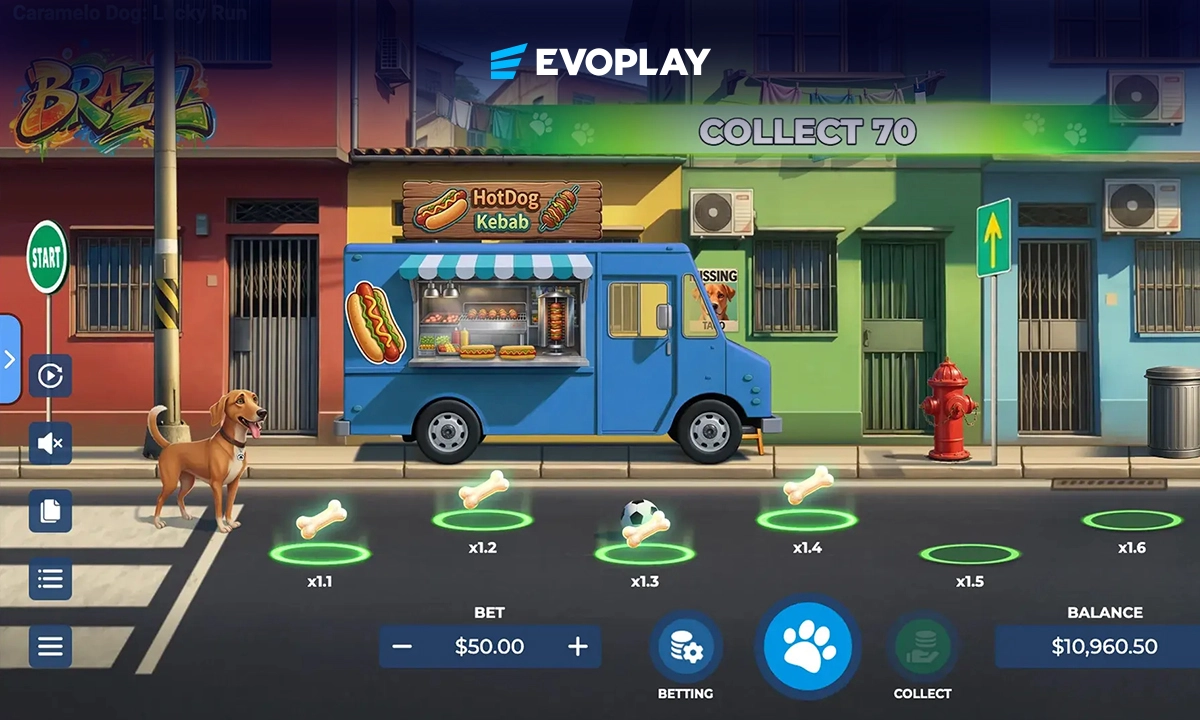
Caramelo Dog: Lucky Run, a new arcade-inspired crash game from Evoplay and SlotCatalog, builds on this idea through Taco – a caramel dog inspired by one of Brazil’s most recognisable cultural symbols. The character doesn’t need an introduction for its core audience.
This article explores how a cultural reference became the foundation for a game concept and how understanding the audience can shape the experience from the very beginning. Insights are shared by Anastasiia Yakovykh, Lead Product Marketing Manager at Evoplay, and Mykhailo Kachanov, Chief Business Officer at SlotCatalog.
From market opportunity to product concept
The Latin American iGaming market is gaining momentum, with Brazil at its centre.
But market potential alone does not explain what drives player interest. The more relevant question is what players truly connect with – and why.
That question served as the starting point for Caramelo Dog: Lucky Run.
As Anastasiia Yakovykh explains, the team looked closely at Brazil’s player landscape, where animal themes consistently perform well. At the same time, one of the country’s most recognisable cultural symbols – the vira-lata caramelo – represented an existing cultural connection that remained largely unexplored in iGaming content.
That gap became the foundation for the concept. Not as decoration, but as direction.
This is how Caramelo Dog: Lucky Run took shape in collaboration with SlotCatalog – starting from recognition, not theme selection. The idea was not just to build on a familiar cultural symbol, but to turn that recognition into interaction:
Caramelo Dog: Lucky Run was an opportunity to rethink localisation – not just through language, but through how the game looks, feels, and plays. Brazilian players respond strongly when they recognise familiar cultural references, and that connection can naturally drive engagement and loyalty.
Mykhailo Kachanov, Chief Business Officer at SlotCatalog, adds another angle:
The starting point was whether a mechanic could carry a culturally specific identity rather than a generic theme, and whether that could translate into measurable commercial value in the target market. Brazil was a natural fit given its scale and the growth of crash game formats.
The story behind Caramelo Dog: Lucky Run
Cultural meaning rarely comes from invention. It comes from recognition.
Across Brazil and LATAM, certain symbols are not “themes” – they are part of everyday communication. They live in sport, entertainment, and digital culture, already carrying emotional weight before becoming part of any product.
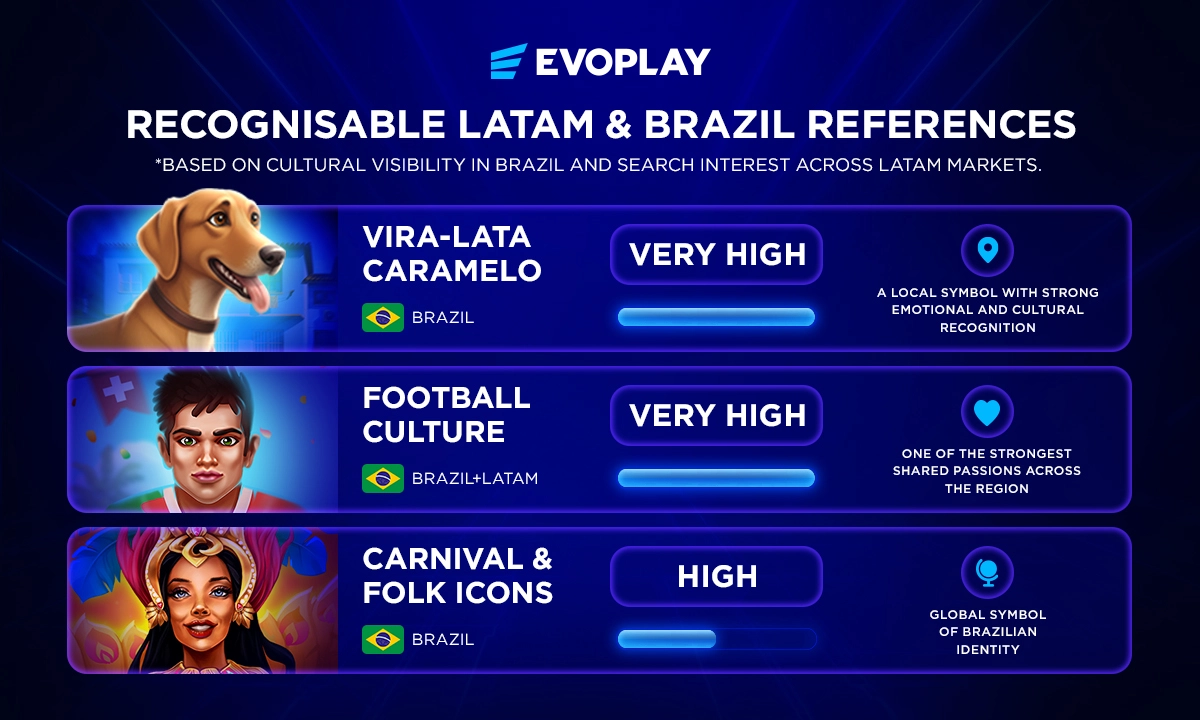
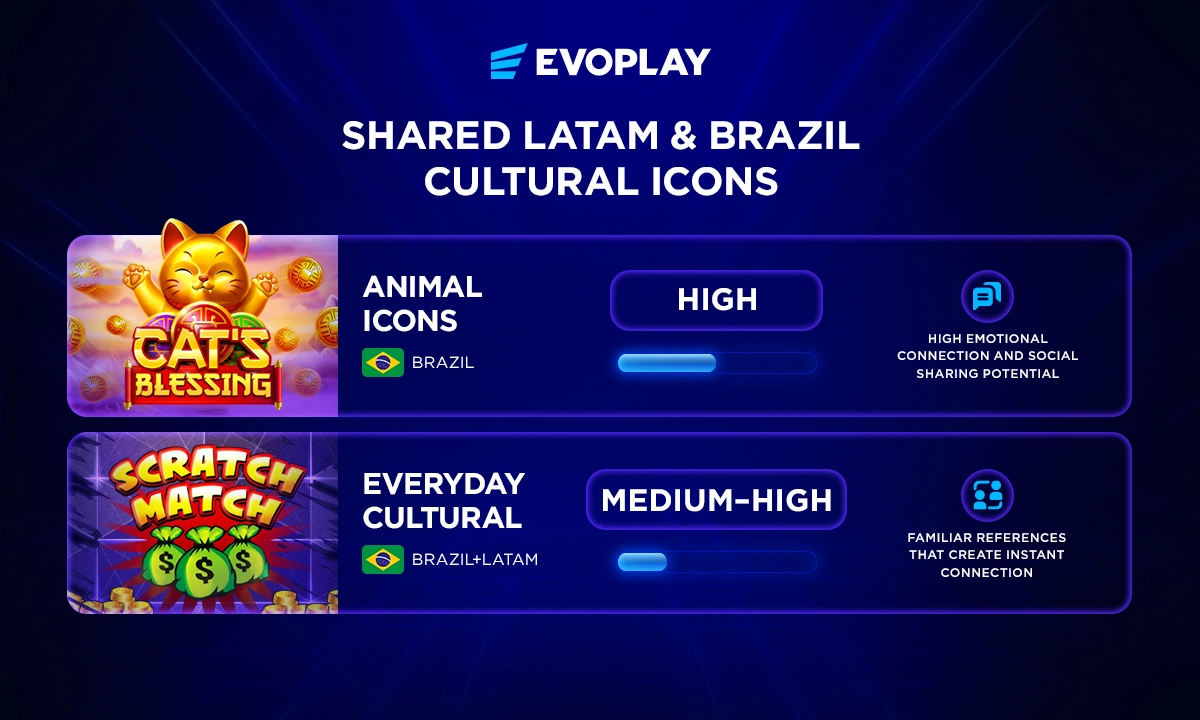
Caramelo Dog: Lucky Run takes one of those signals and translates it into a playable form. Not by changing it, but by keeping it recognisable inside a different context.
Taco is not a reinterpretation; it is a recognisable figure brought to life.
That connection is built into the game through a simple emotional thread: Taco’s journey home. Here, emotion is not layered on top of gameplay. It moves with it. Recognition becomes action. Reaction becomes feeling.
The crash structure and CrossyRun™ mechanic reinforce this rhythm, turning quick decisions into a continuous flow rather than isolated moments.
What emerges is a system where the cultural reference and gameplay logic are not separate layers – they evolve together within the player experience.
Evoplay and SlotCatalog: from collaboration to execution
Effective collaboration relies on a clear understanding of roles. Caramelo Dog: Lucky Run was built around that principle from the start.
Each team contributed its expertise to the process – from market understanding and audience insights to game development and player experience design.
Evoplay focused on translating behavioural and cultural signals into an integrated player experience, shaping pacing, visual identity, and interaction flow for a Brazil-first audience with wider appeal among players who enjoy fast, decision-driven game formats.
As Anastasiia Yakovykh notes, localisation here goes beyond language into design itself – influencing how the game feels moment to moment, from character presence to environmental detail and rhythm of play, shaping an experience that is instantly readable, immersive, and designed with shareability in mind.
SlotCatalog supported the project with market insights, elements of the CrossyRun™ mechanics framework, the market intelligence behind the cultural brief and the distribution infrastructure supporting the launch.
As Mykhailo Kachanov points out, cultural familiarity shapes how a game is both experienced by players and presented in the market, strengthening its go-to-market strategy from the outset.
For partners, including iGaming operators and affiliates, a recognisable concept creates a clearer positioning angle from the outset. Instead of building awareness from zero, operators and affiliates can build communication around an idea that already has meaning for the audience.
He adds that its core audience is Brazilian and LatAm players who are familiar with crash formats and respond well to culturally relevant content. This reflects a growing preference among iGaming audiences aged 18–35 across the region for fast-paced, interactive formats with instant engagement.
Beyond Brazil and LATAM, Caramelo Dog: Lucky Run is designed to appeal to players through its simple gameplay, memorable character, and enjoyable overall experience.
Where cultural relevance leads
Caramelo Dog: Lucky Run is still at the beginning of its journey, but early performance signals already show strong traction in Brazil, with engagement extending across LATAM.
The early response suggests that players are willing to engage with ideas that already have cultural meaning, provided those ideas are supported by gameplay that feels intuitive and rewarding.
In the end, Taco’s story is simple: familiar, heartfelt, and instantly recognisable. And that is exactly what creates a connection with players.